
Vic Bassman Interview
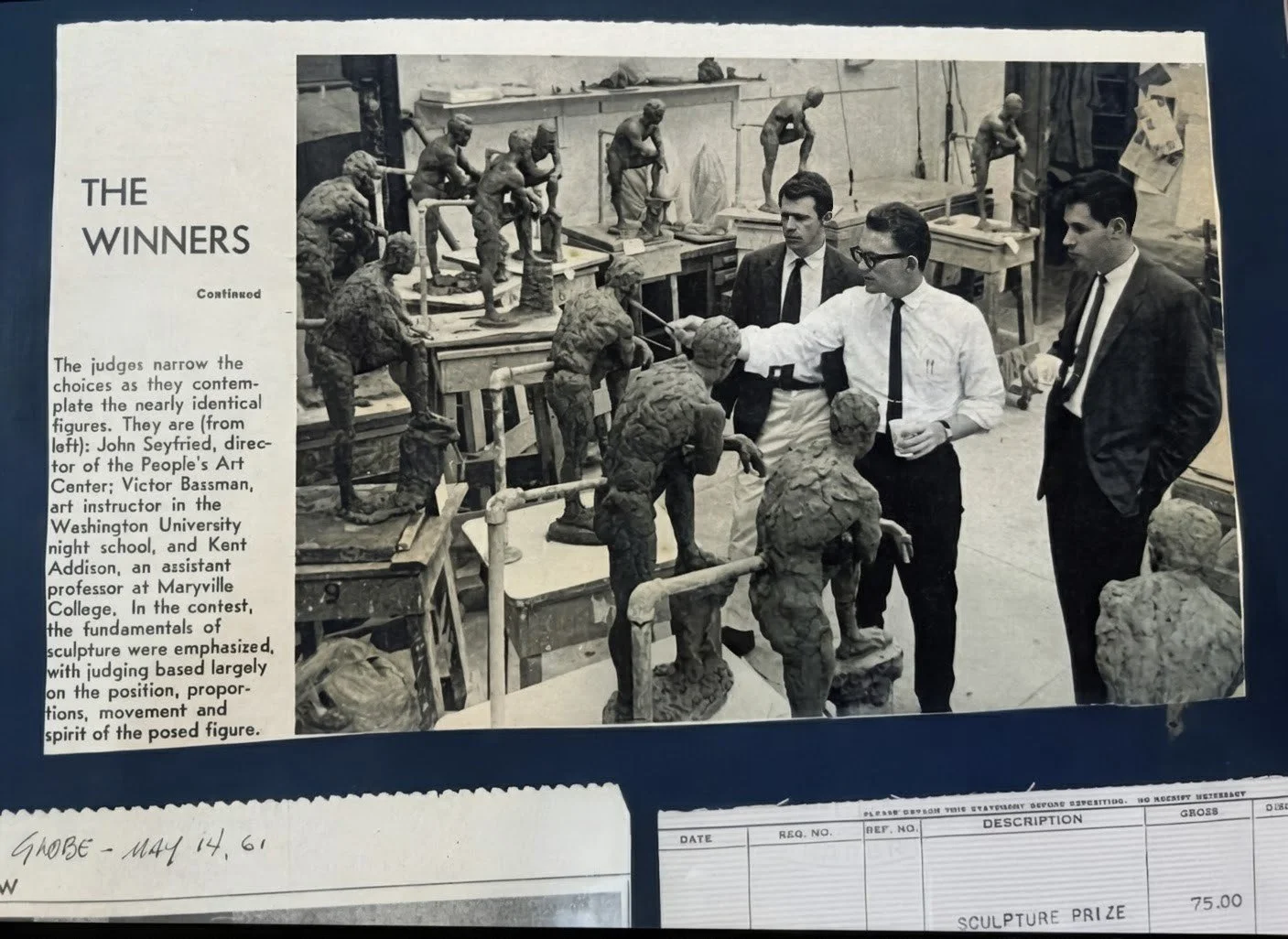
Advanced Leisure conducted an interview (on May 19, 2024) with Victor Bassman, the longtime head of the art program at the Ladue Horton Watkins High School in Saint Louis, MO, alongside his partner, Janet Mueller. Eric Nauman and James Moog were joined by Jim Ibur, a Professor of Art at the St. Louis Community College- Meramec program and a former student of Vic’s. At the time of this interview, Jim was organizing an art exhibition called The Ripple Effect (June 2024) which would feature the art of Vic Bassman and his students to celebrate Vic’s years of mentorship and teaching and to showcase a new body of work that Vic had been working on in the Meramec ceramic studio. Although, Vic has suffered from health ailments that have limited him physically, artistically, he has flourished. We wanted to highlight his inspiring story.
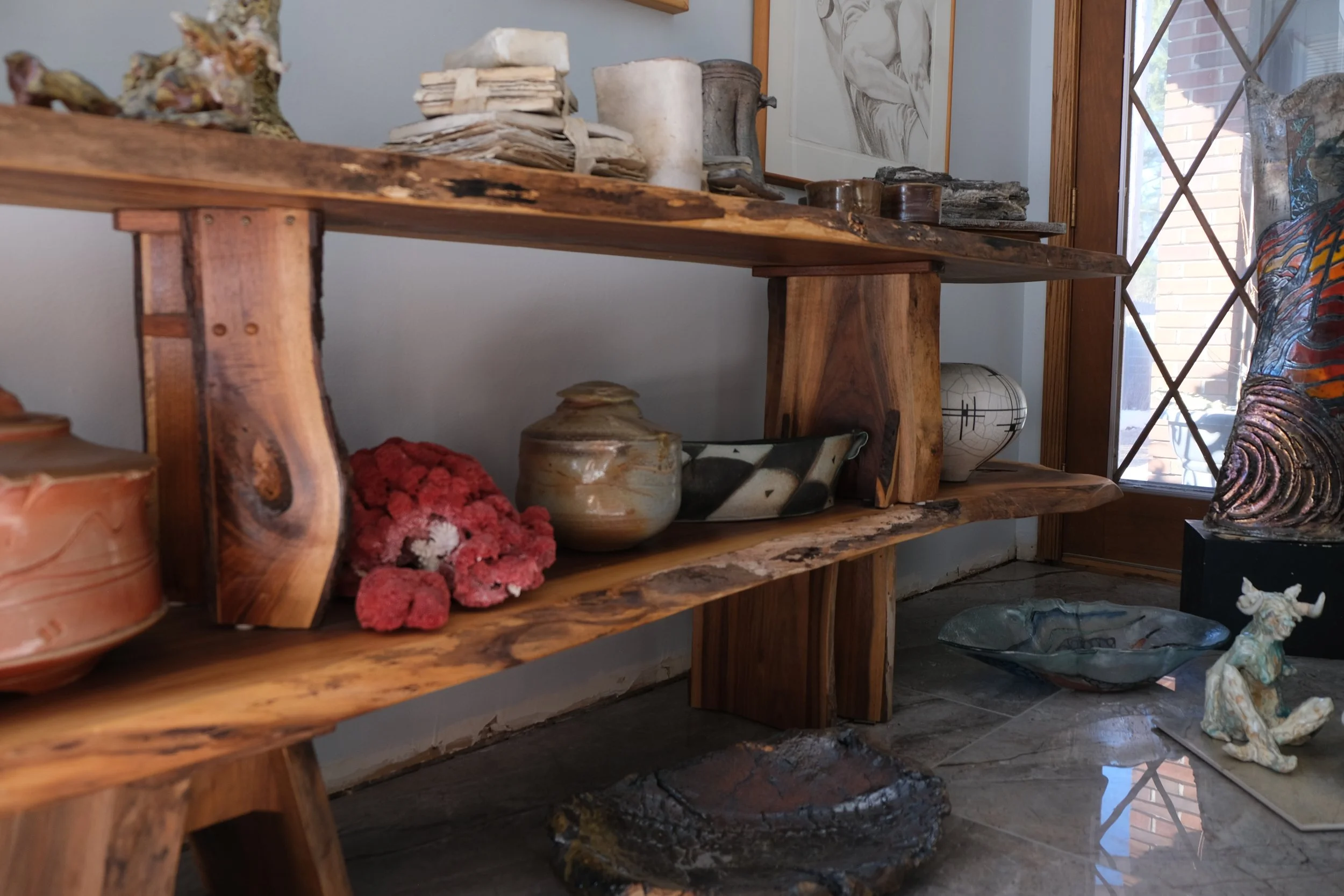
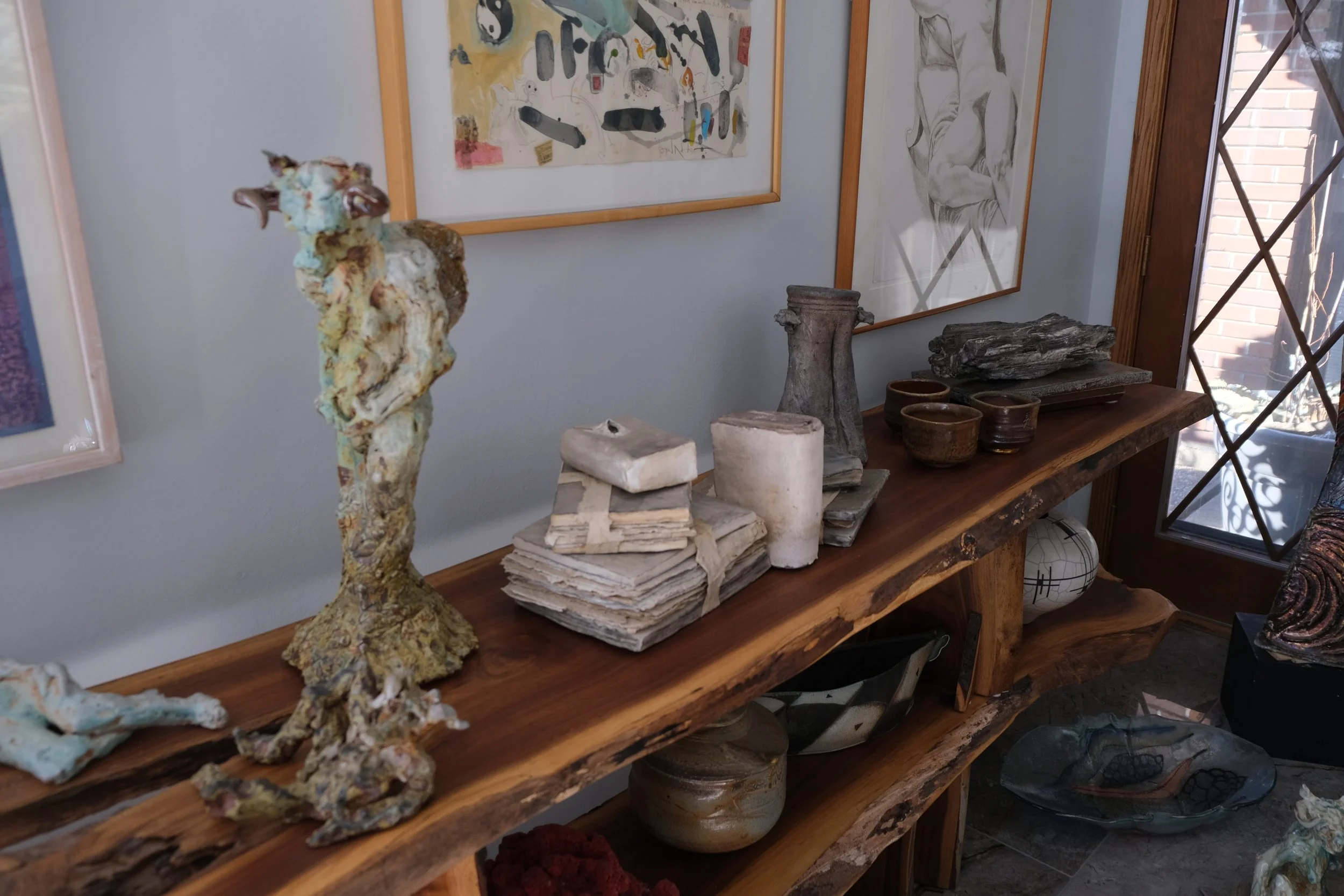
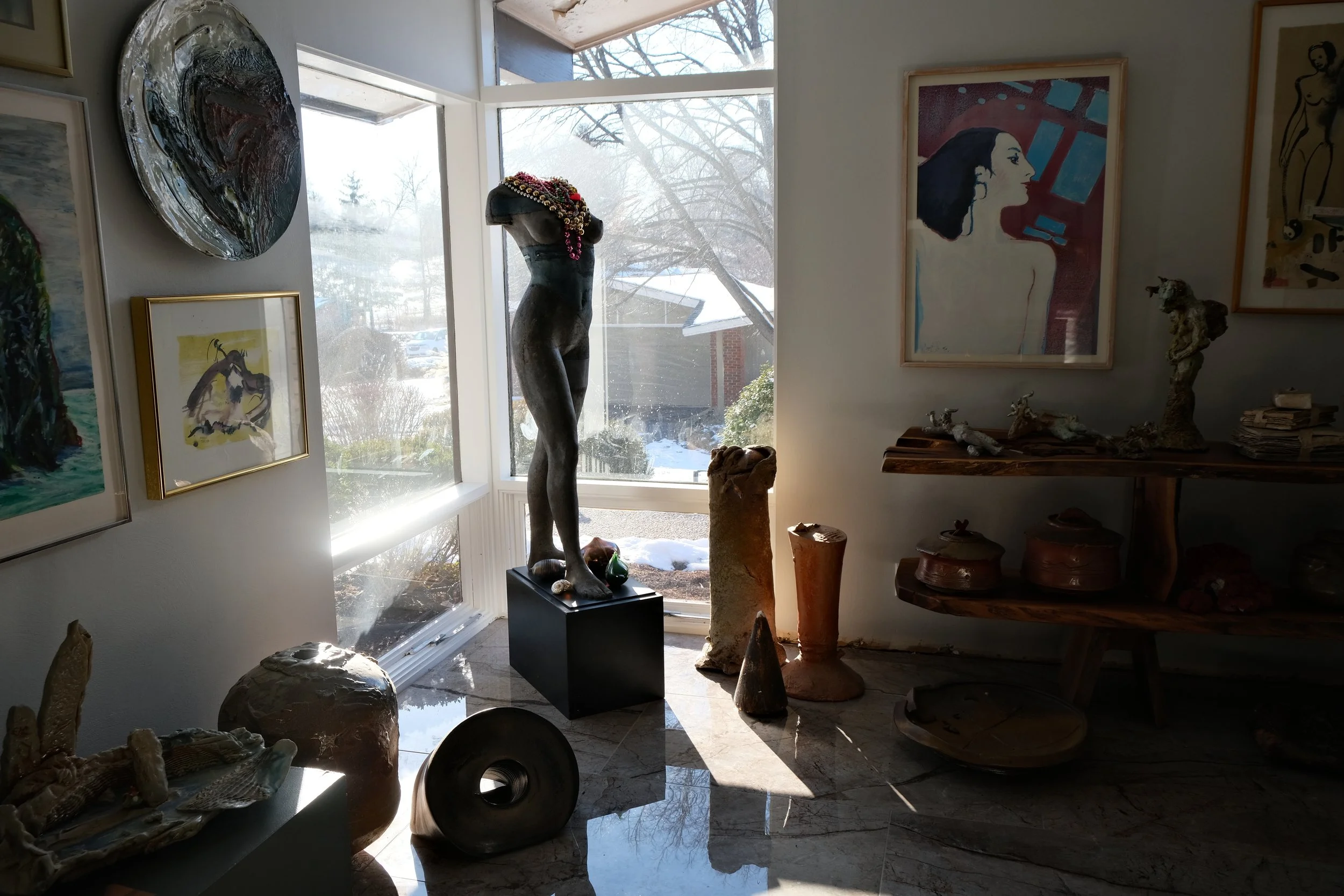
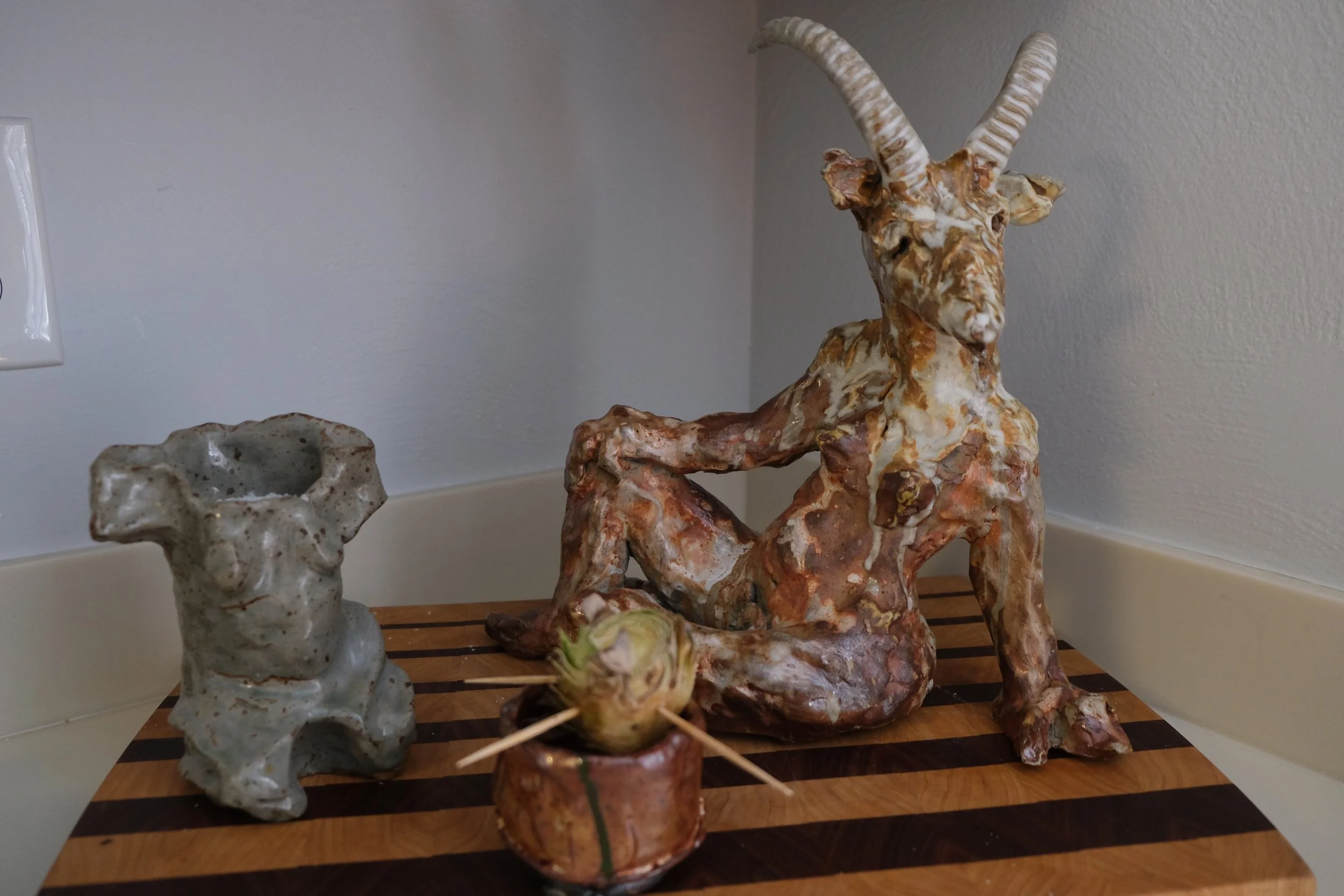
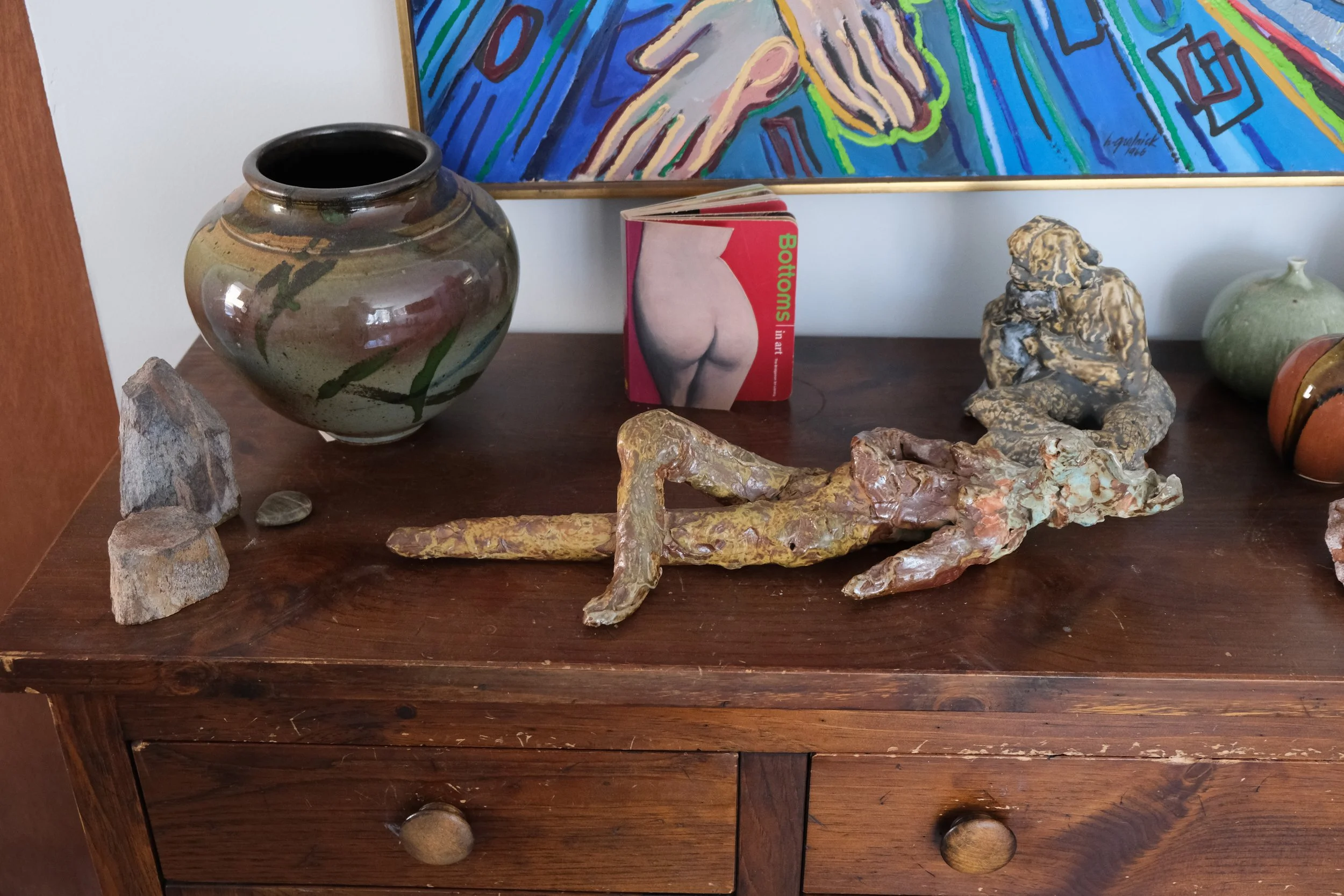
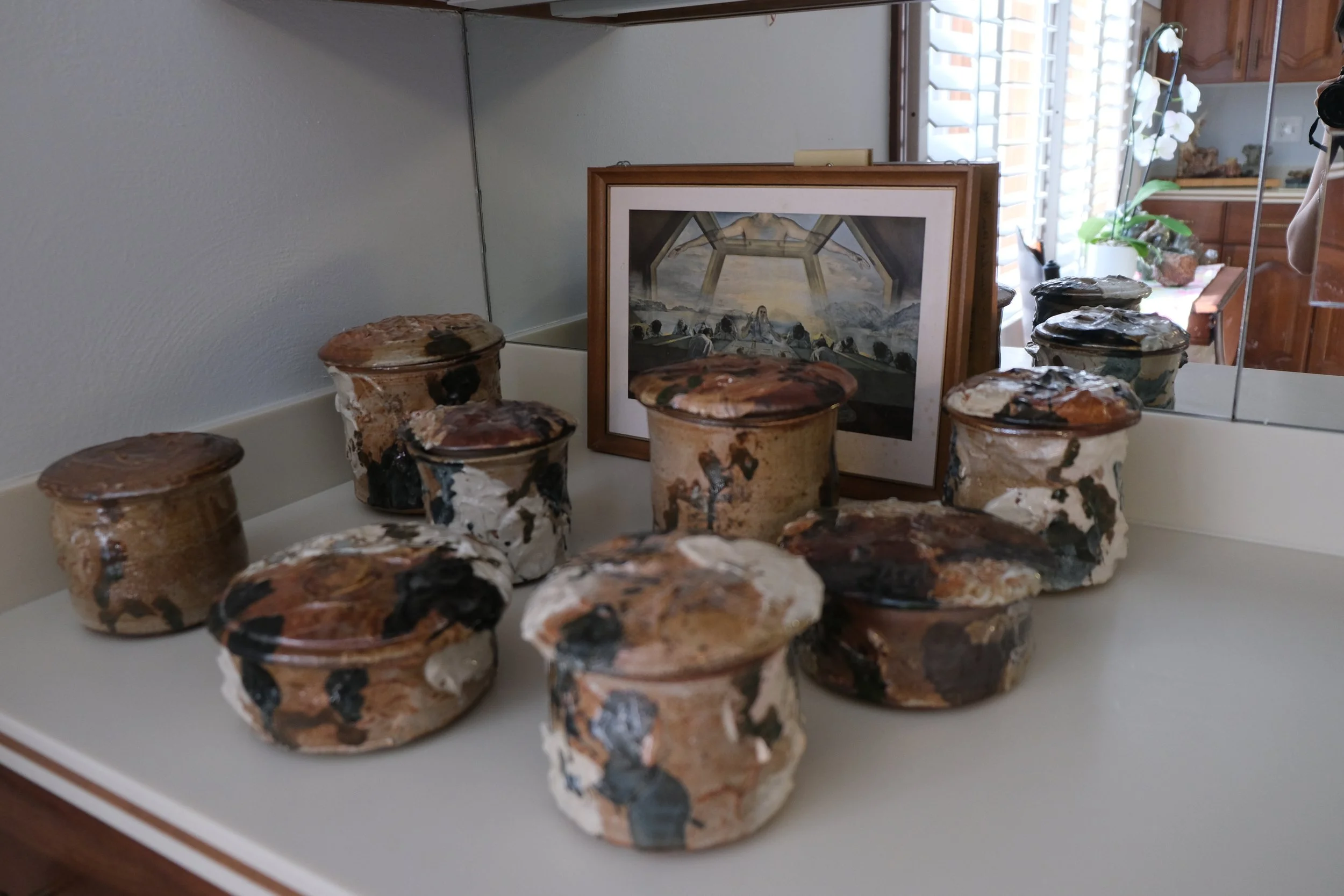
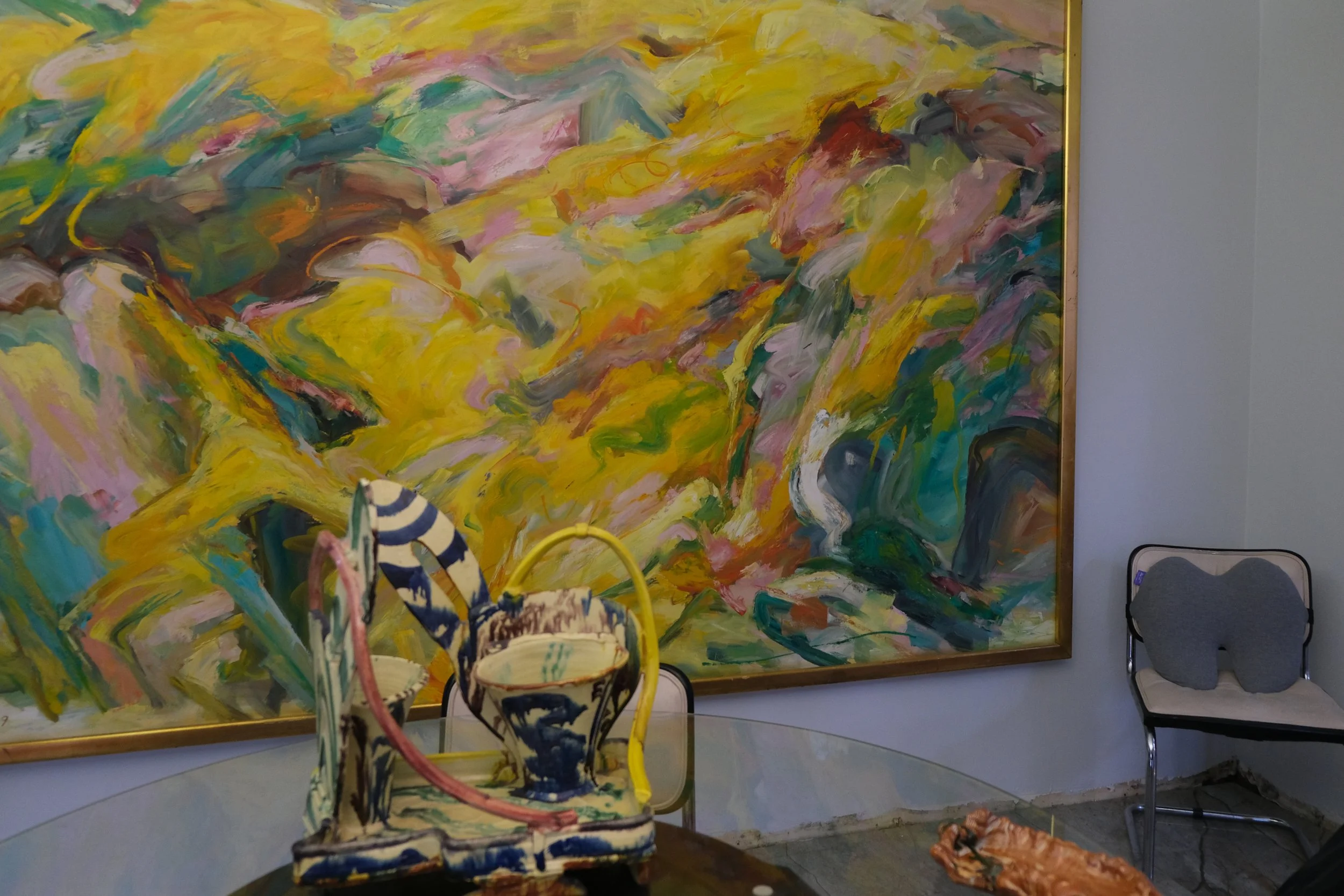
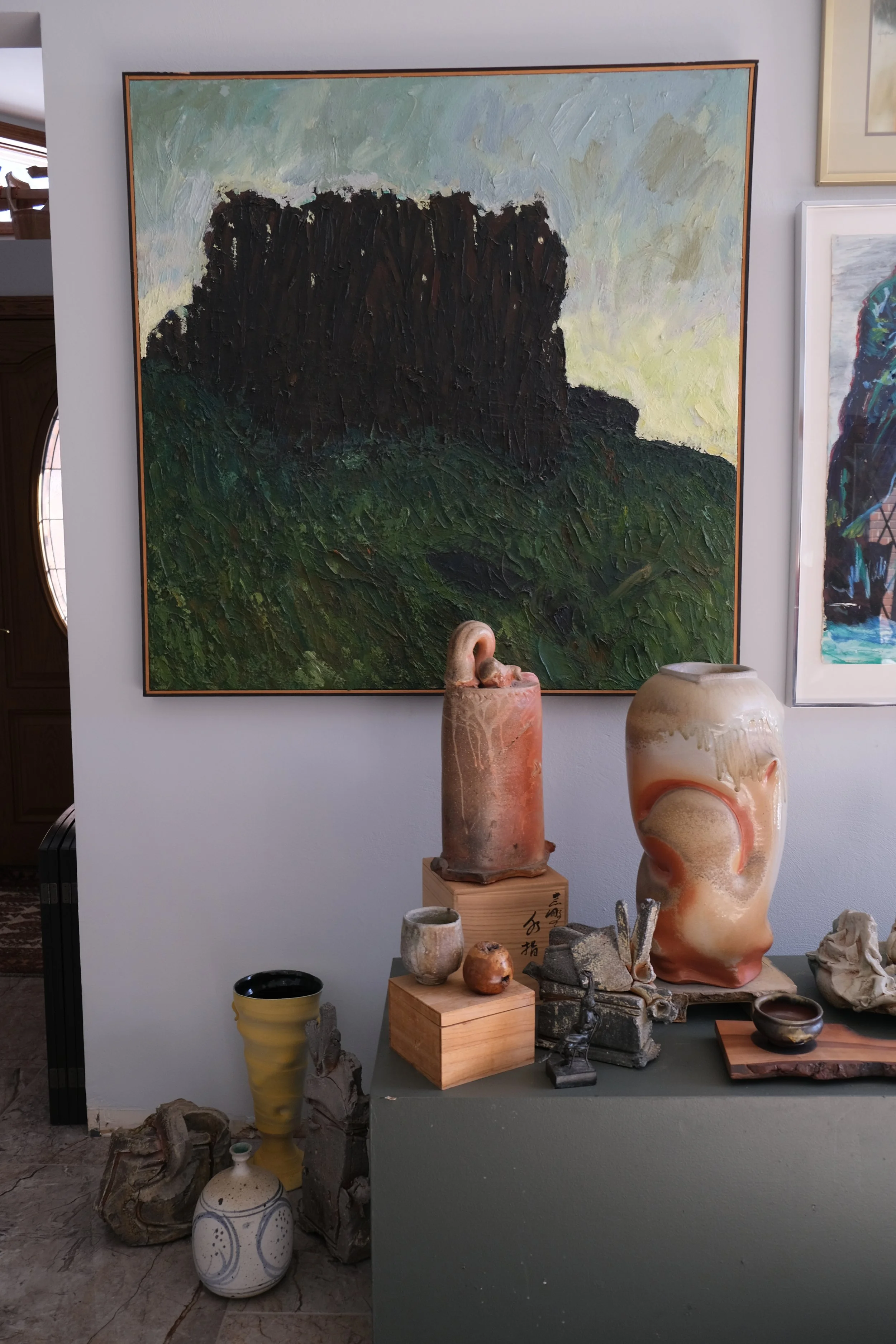
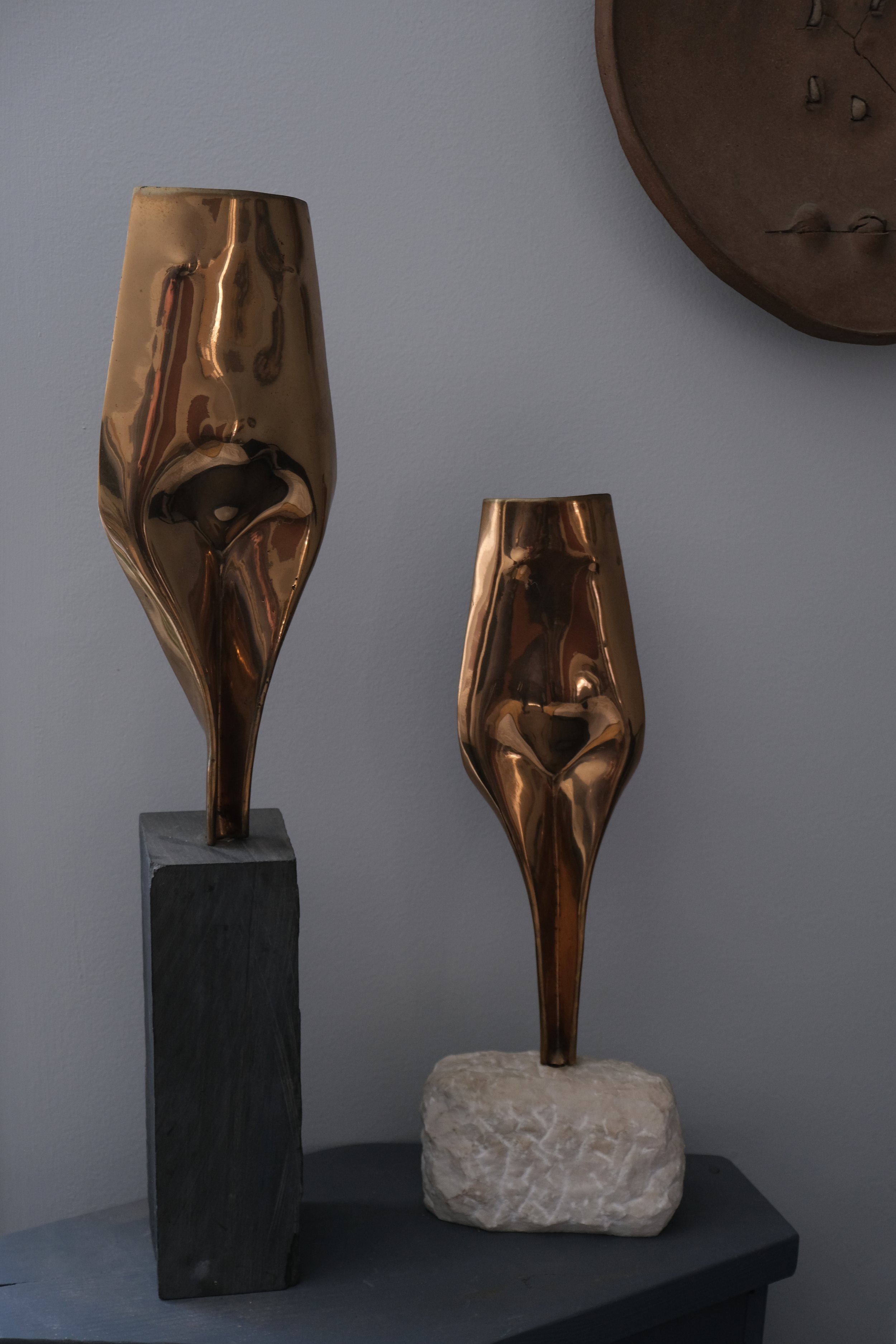
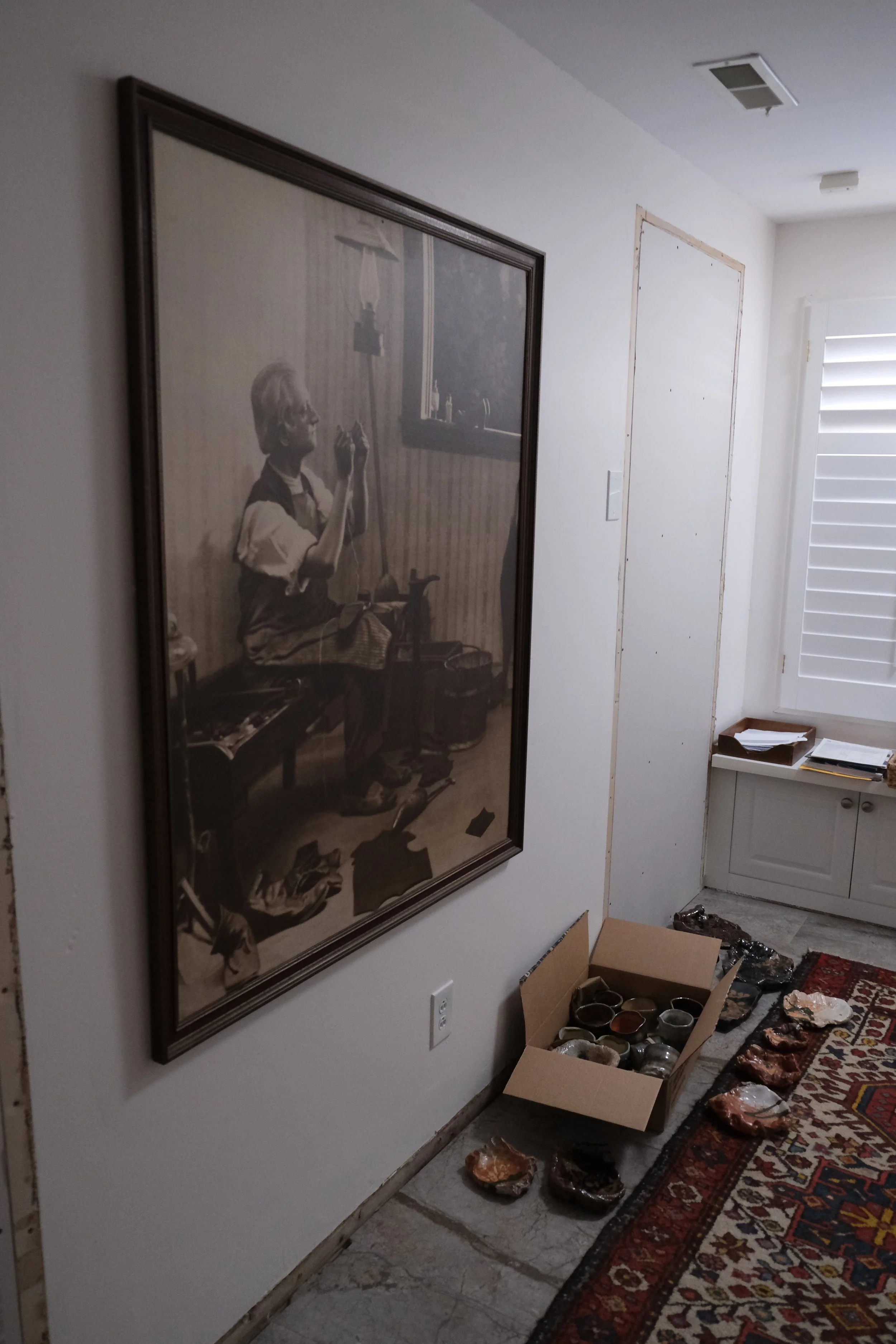
<photos above> Perfect Artist House: Vic and Janet’s house is full of beautiful art objects created by Vic and collected from many artists over the years.
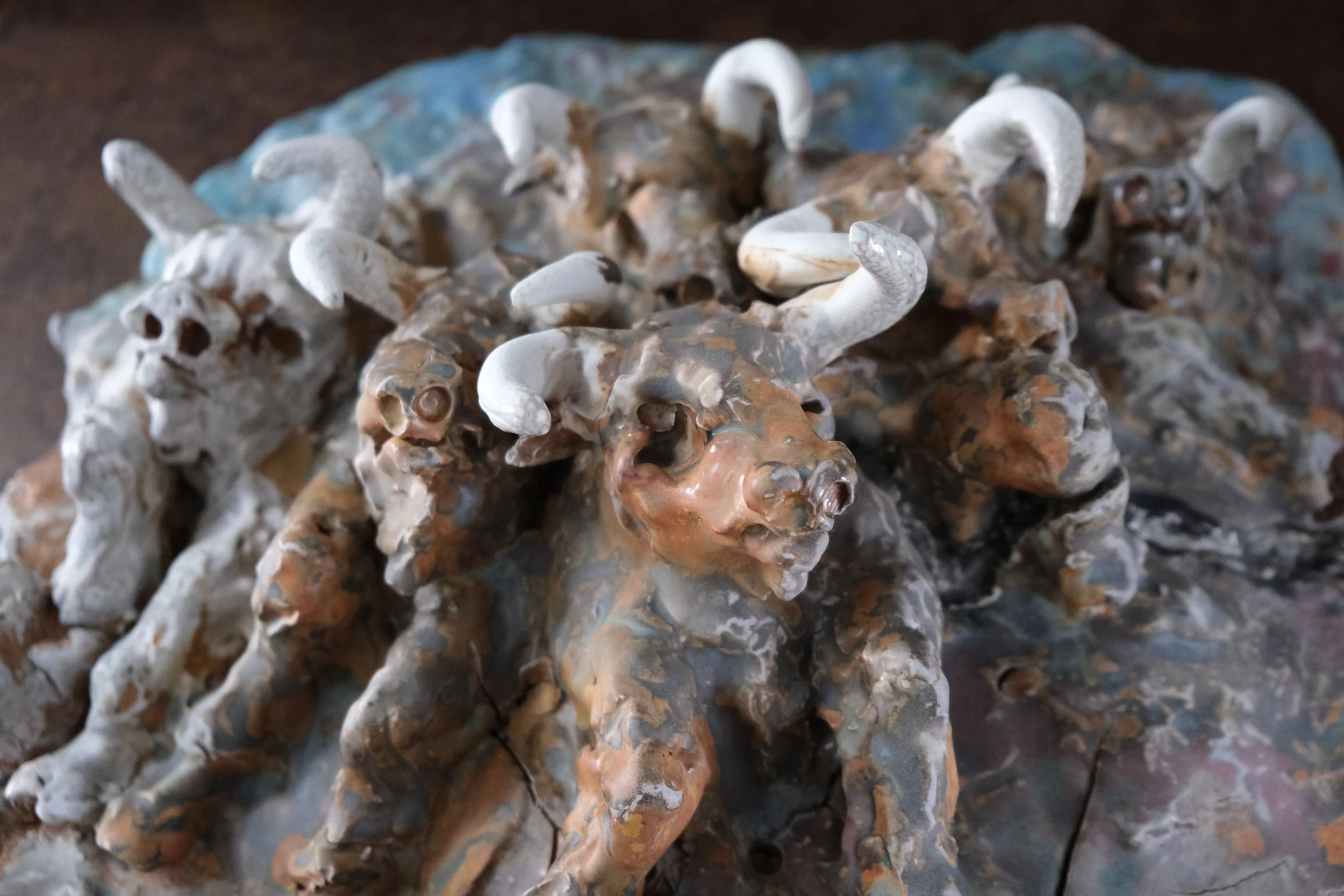
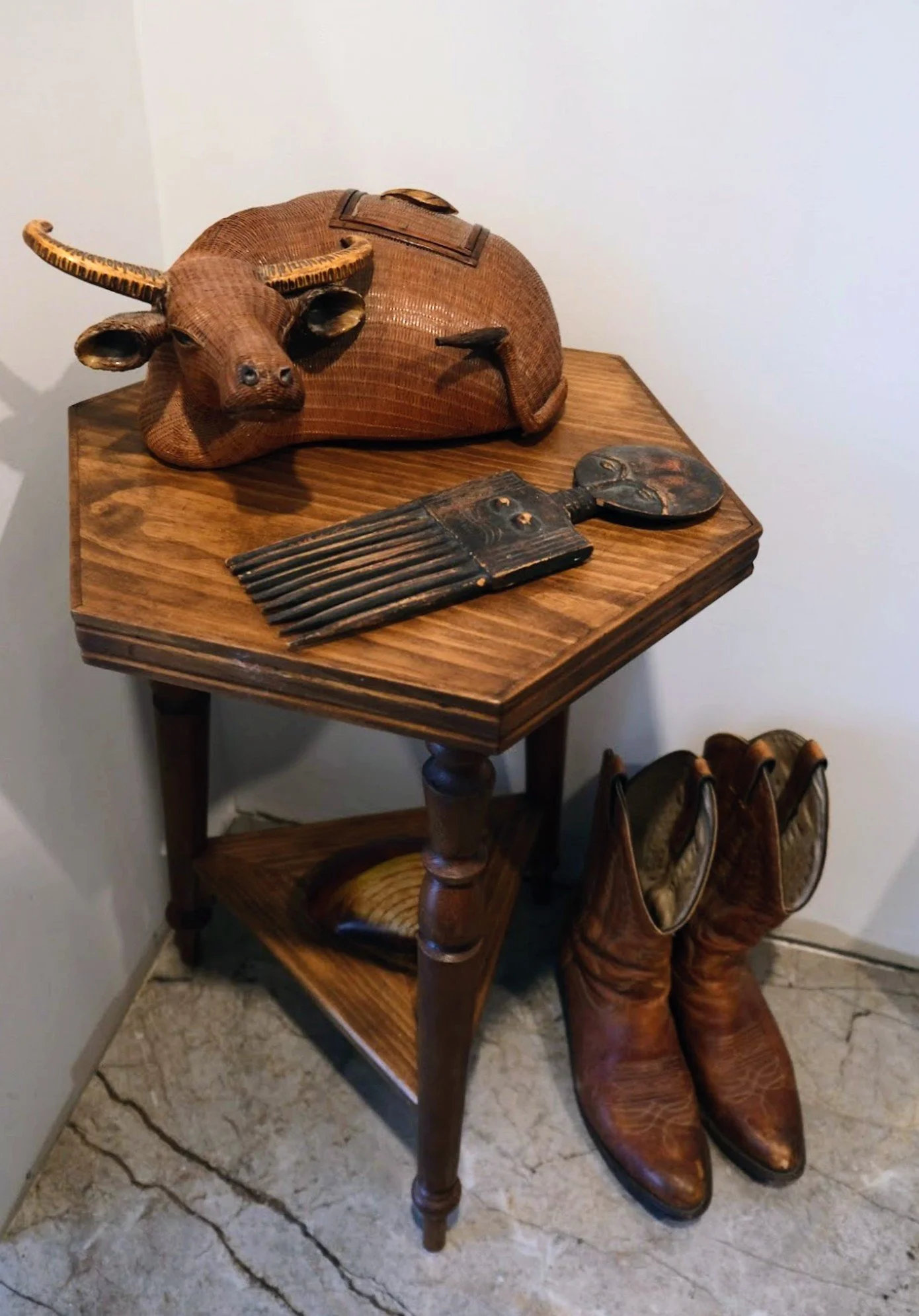
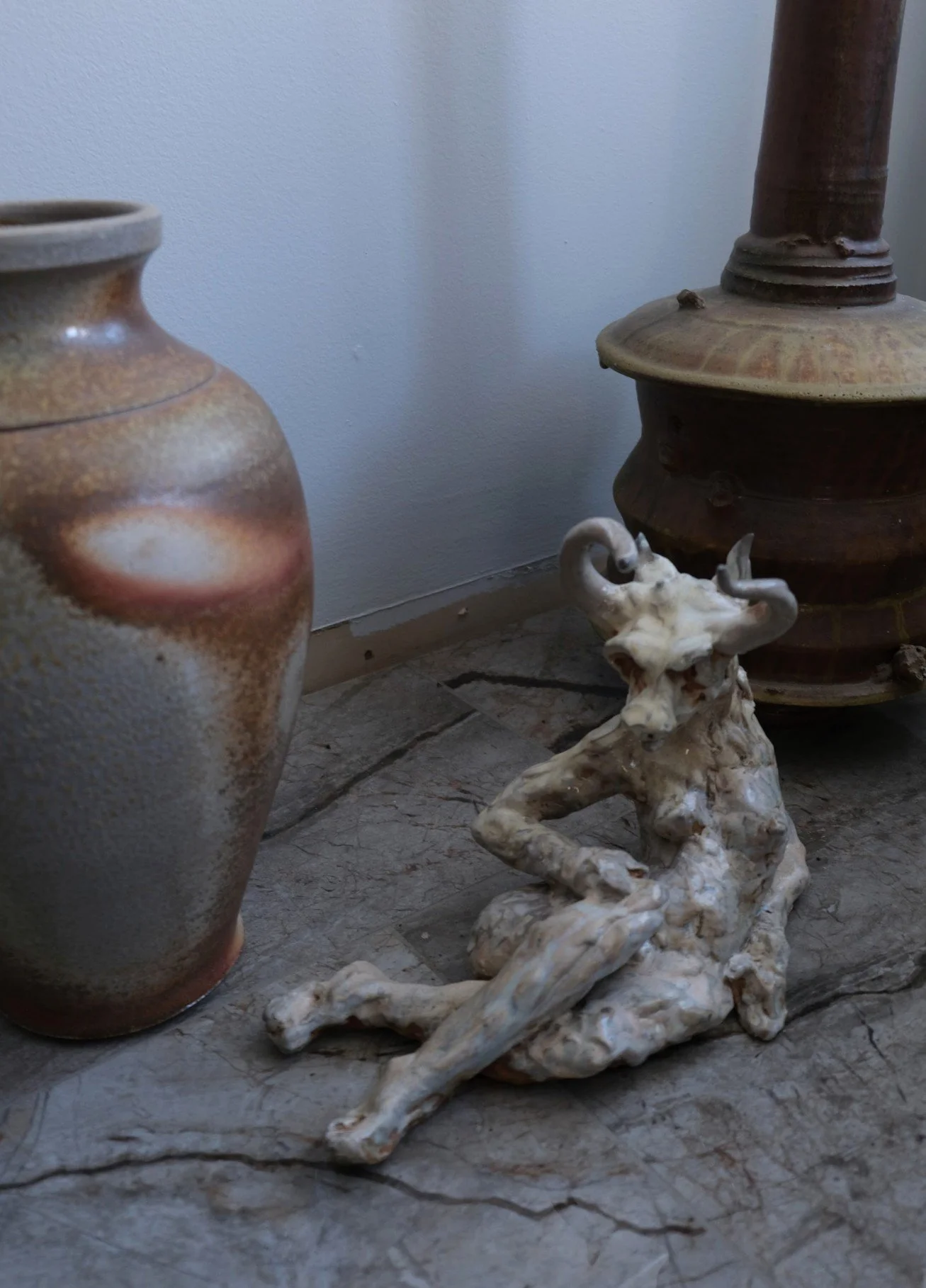
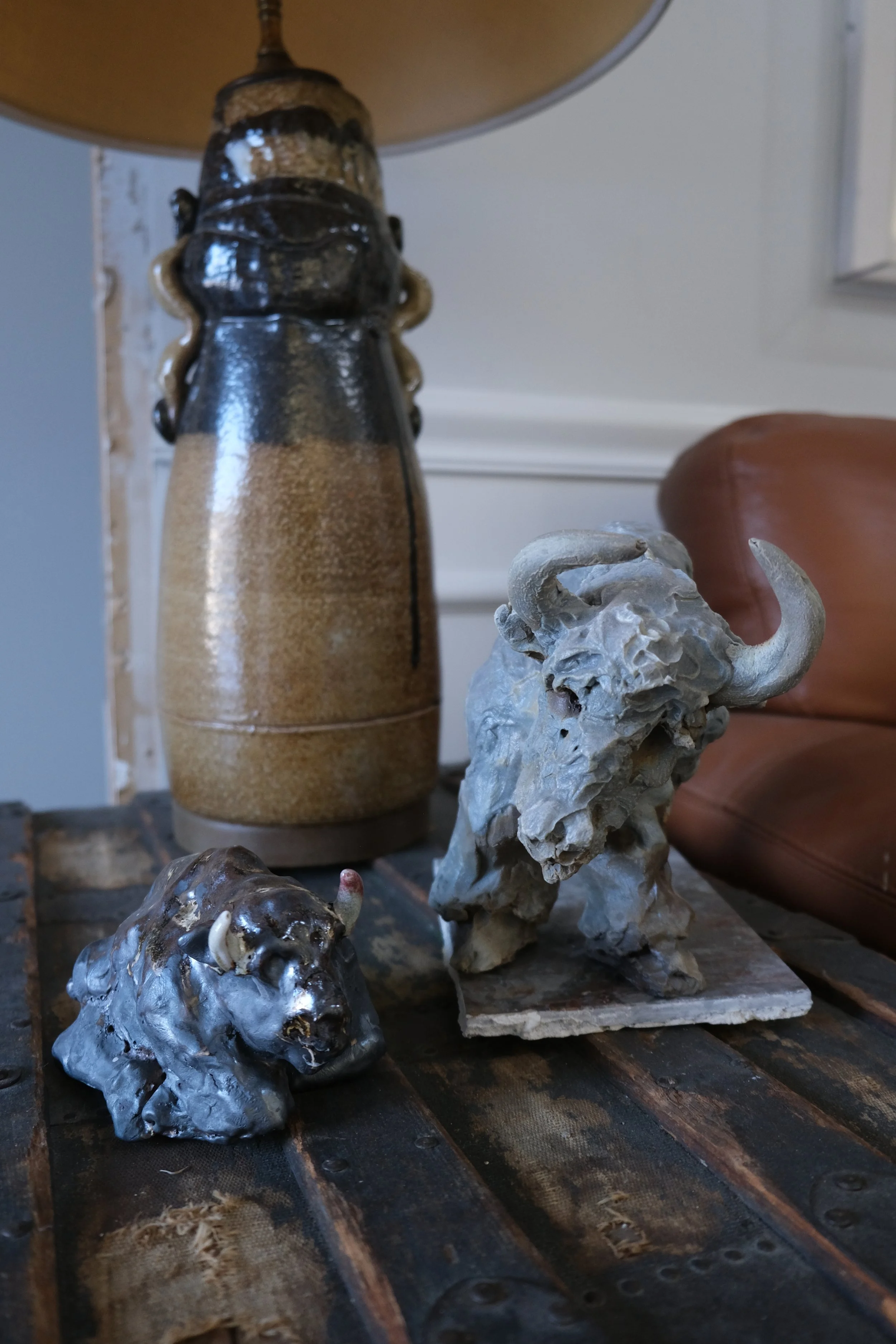
<photo above> Vic has been creating many bovine figures over the years.
Jim: Why don’t you start with a little background about the path that brought you to where you are now?
Vic: When I was younger and I thought I was going to be an illustrator, I found I could draw. My parents are country people, they come from a little town called Crocker, Missouri, which is in its own time warp. It has not changed since I was a kid; it is three blocks long. For some reason, entertainment for me was drawing. When we moved to St. Louis, drawing was something that I could do, and I also decided that I needed to go to college. There was one particular person that I really related to… who was an illustrator. In fact, I still consider him one of the greatest illustrators. I cannot remember his name right now.
So, I had one class in ceramics at Washington University in St. Louis, and it was interesting, but I decided that I like sculpture better at Wash U. By the time I graduated, I wasn't particularly interested in being a sculptor anymore. Sculpture takes quite a long time, and I was doing metal and stone at the time. I had more ideas than I had time to finish them.
Once you leave school, you're going to be looking for ways to make a living. My former sculpture teacher suggested to me about becoming a teacher for Art 1 and Art 2. A job opening at Ladue Horton Watkins High School came along, and they hired me.
Jim: What year was that?
Vic: ’66. That's a fun year. I had a thing called craft and had four or five different little projects including pottery. The students really liked clay. The school was very open to creating an environment where kids would learn and enjoy. So I proposed the class in clay, and they bought me three little pottery wheels and a little kiln. When the kids began to make things, that inspired me, the kids inspired me as much as I inspired them. So over a period of about three years it went from one class to three full classes. And I also became the department chair, and we began to have much more specialized programs such as painting programs, jewelry programs, drawing programs, and clay programs.
My working definition of pottery is that pottery is a term that is used for mass production. My definition of ceramics is using clay and pottery format, like you are encouraged to stretch a theme more magically, to develop a theme over a period of time and really focus on refining the idea. When I was teaching clay, I would give the [ceramics] assignment like making a cup, and some students would say, “now I’ll make a bowl after finish making a cup.” After making a bowl, some [students] will work on making a plate next, and I found that to be great.
At this point, ceramics became a kind of expression, I tried to make lots of… let's call them “sets,” because I realized that making “sets” of things wasn’t comfortable for me. I was looking at all kinds of other things, and that's where I discovered Peter Voulkos, the guru. He's the god of clay. And that's when I saw that clay was as important a material expression as painting and sculpture. At that time, there was the belief system in the art world that the only true art is painting and sculpture.
Jamie: When did you and Peter Voulkos meet?
Vic: It was about 1972, he was giving a workshop. Actually, I have one of the plates that he did. At that time, Peter would often drink and make objects [in his studio], and he had a certain “presence,” a way of talking. I didn't necessarily relate to that, but I did like the way that he used the material in such a loose manner. I wanted to [work that way]. But at that time I didn't know how to release that part within myself. So Peter was the great creative individual who released my idea of “pottery” and turned it into “ceramics” and who unleashed my “presence” in art.
There was a kid, his name is Jeff Whyman. He went to study with Peter and became good friends with him. Because of that association I began to meet these incredible people who were taught to use clay differently than what I believed in before.
Being friends with Jeff and being associated with Peter, I was able to start collecting [artworks] when some of these people were “affordable.” Even at that time, I couldn't afford some of their works. But with friends, you can make deals and trade. I wanted the original. I wanted their real essence; I wanted their fingerprint on their plate. That's when I really began to think about collecting art. If I’d had money, I would be a much bigger collector than I am now.
I enjoy the way each individual finds phenomenal paths. These days, I think a lot about how it's really phenomenal what artists do to and by each other. And so I began to think about clay that way too. Think about what influence and effect your interviews are going to have on many people! To me, it's all the same. Somehow, we find people along the way that relate to my idea, your idea, and those encouragements help the next person move a little further along. It's an ongoing process. This conversation I am having with you may have an influence on what I decide to do today or whether or not I get into the studio. I think it's kind of a mental survival to push the gray cell to do something a little better, a little more.
Jamie: And that sort of was what happened when you started to see pottery and ceramics as two different things, right? And your collecting helped contribute to that.
Vic: Yeah, it was there. But I really began to see the relationship to everything. It wasn't just about clay. It just so happens that clay became my material. And I think, again, there are universal people. There are people who are able to do clay, cook, teach. I think it's very complex. And I just don't like to talk about things as if it is about a specific thing. I honestly believe that this whole thing is what makes us whatever it is that we end up doing.
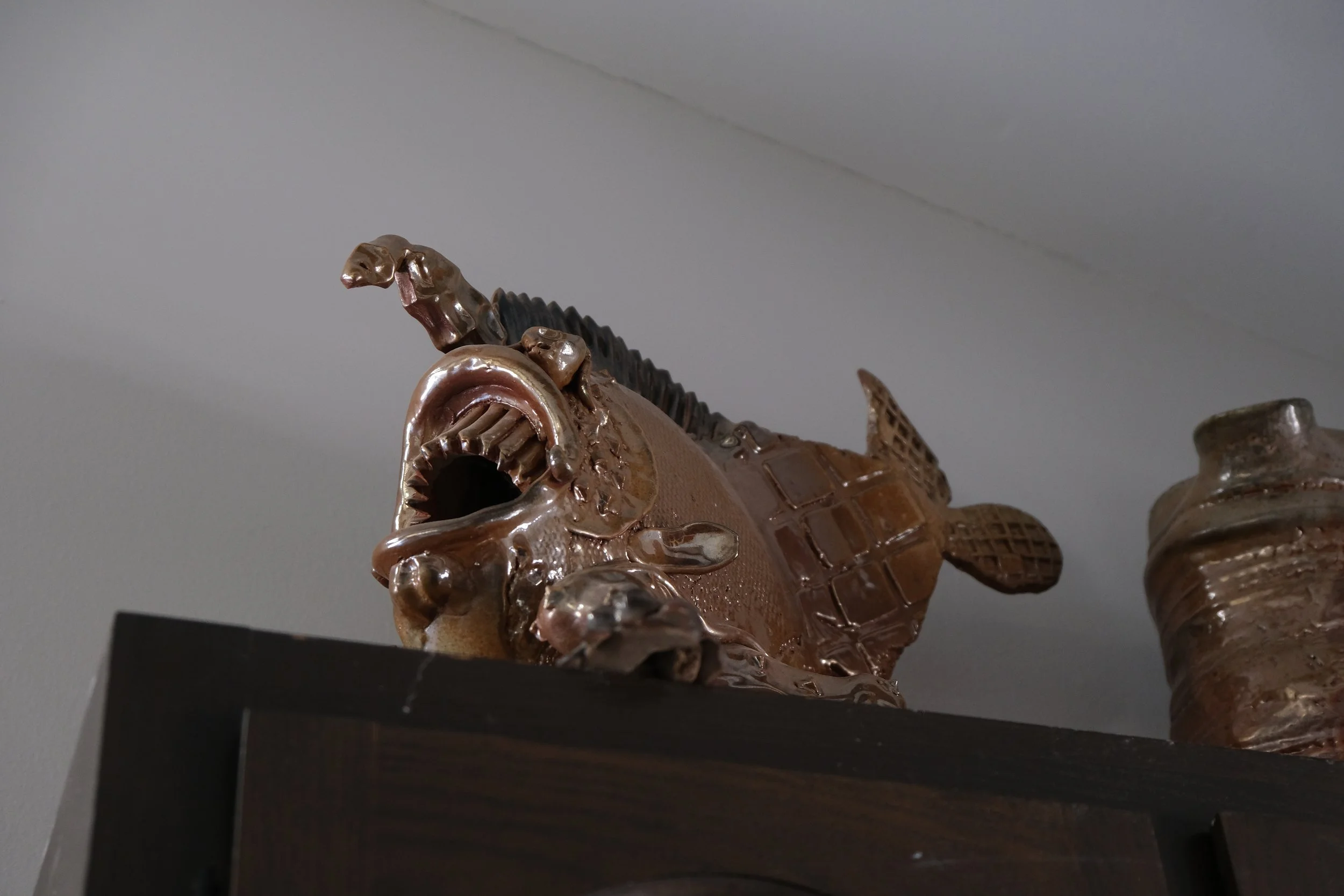
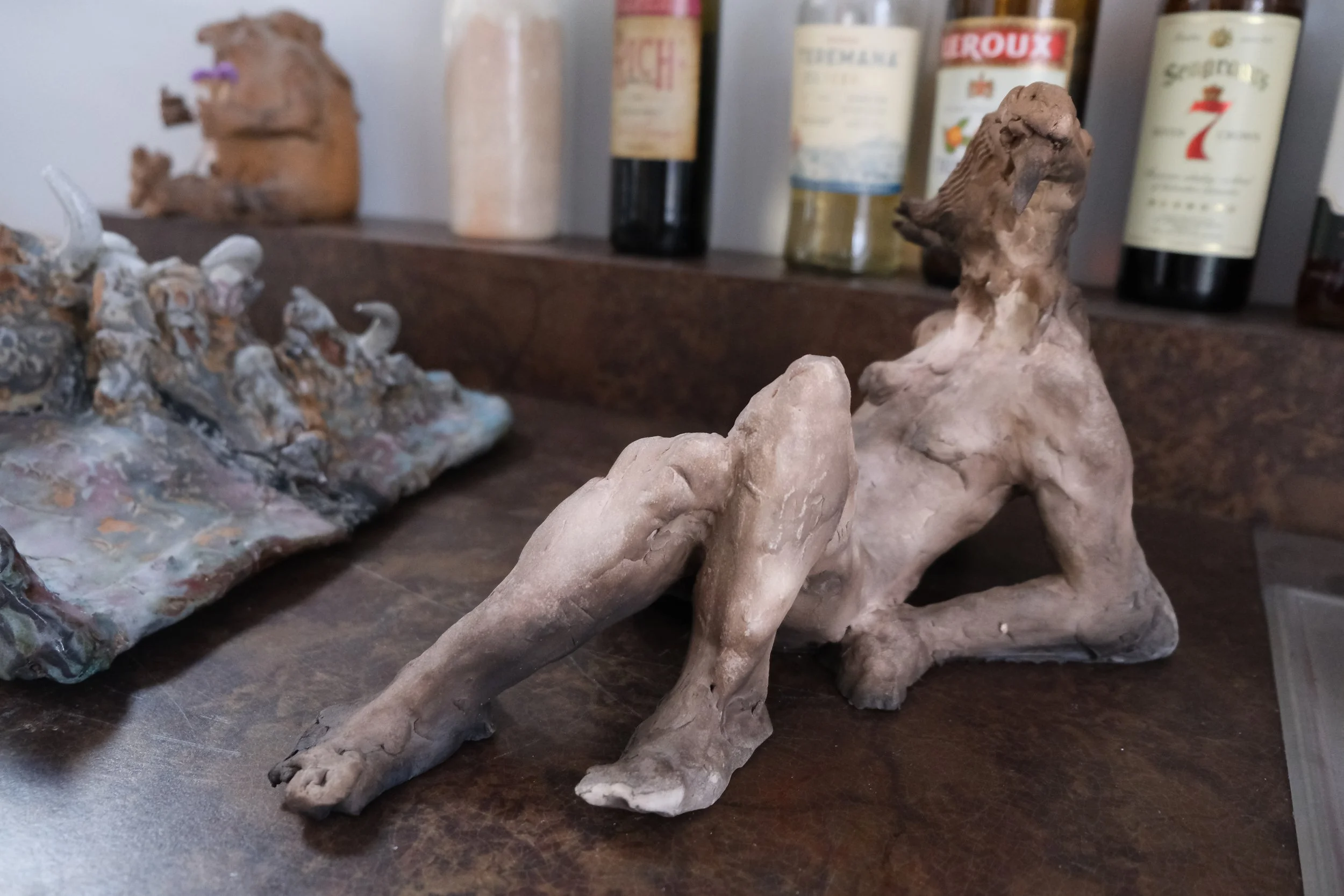
Jamie: Obviously you're a teacher now, you have a legacy. You have a couple students here [currently in the room]. How does that feel, having that be recognized in this show?
Vic: They have the original effect on me. Jim, at one time had this bizarre effect on me. I had the idea that selling was at that time a large part of it. I was trying to make a living and get the good life. I learned a lot about good alcohol. So I needed to have money to go to the bars. And Jim, like a lot of the kids, he was interested in clay as a student. At that time, [teachers] were not supposed to encourage anybody to go into art because [too often] you can't make a living as an artist. And, I bought into that because I was not able to make a living. But Jim went off [to pursue art] in Champaign-Urbana, Illinois or someplace. I was living in a carriage house behind a big house, and all of a sudden Jim showed up. He had graduated, and at the time, he didn't have any place to work. So I invited Jim to come and make art so the kids could watch what goes on. To see a working artist. I was still in this mindset that I had to make everything thin and light and sellable. I had begun to do something more, at that time, creative. And that's when I had started this, one of the veins of my clay. I was influenced by the artists from Minnesota. And so I was making these things that I called "Torii Gates" which were basically a Japanese theme.
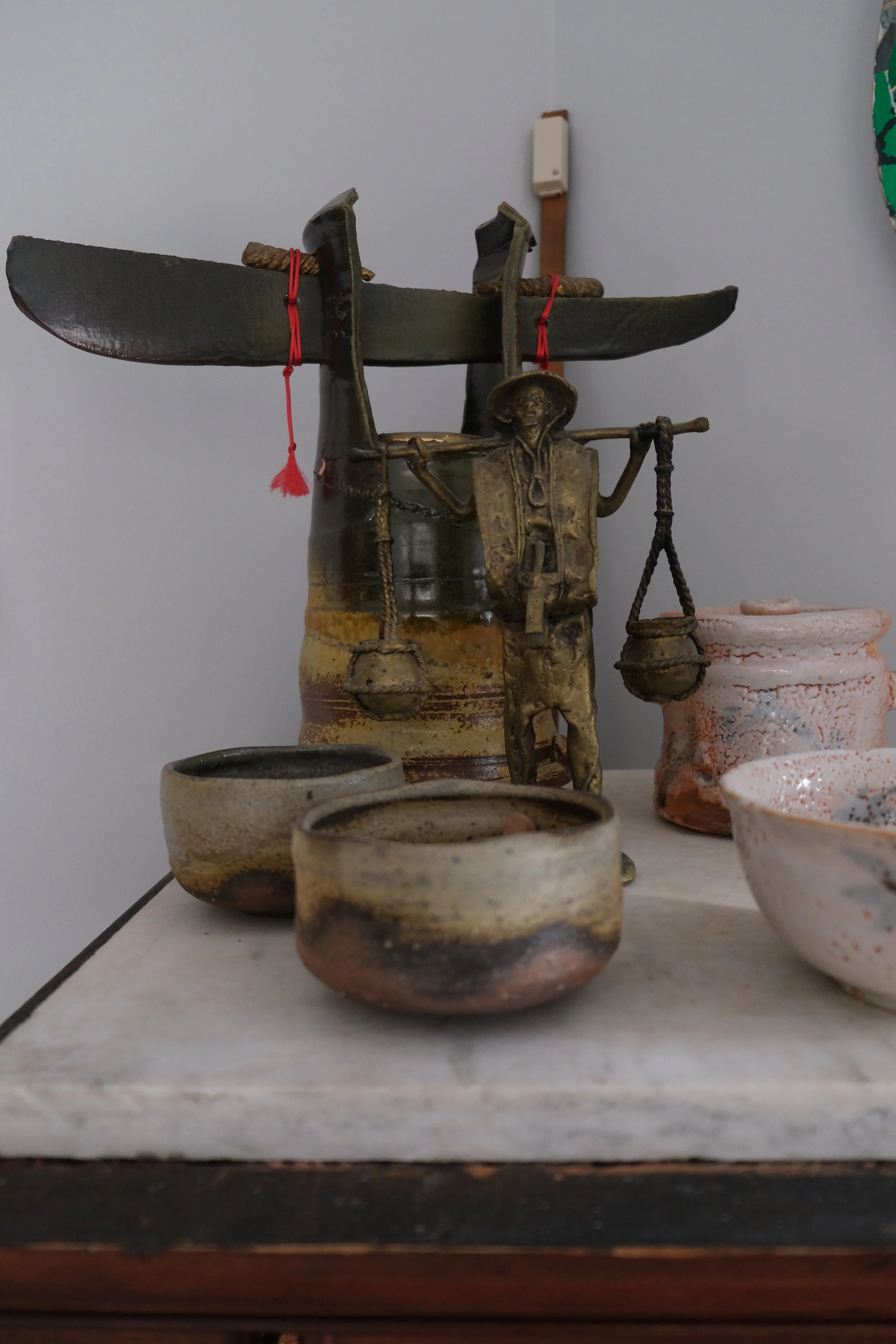
James: Like the big decorative gates they have, which you had gone to Japan to see.
Vic: Yeah. I was doing really thin things and throwing vessels and stuff.
Jim: And then you started to combine more sculpture with your clay here.
Vic: But I was insisting on them being thin and light. And Jim came along and he just simply said, "This element should be thicker." And it was like, "Oh my God." It needed to be thicker. It was like, it hit me in the face with his fist.
Jamie: It's so important to like break those rules that you have in your mind sometimes. Sometimes they're important but sometimes they get in the way, I find.
Vic: We cross-fertilize everybody that's around us, and they cross-fertilize us. Being a farm kid, or raised basically as a farm kid, I was taking on a lot of the behaviors from my parents. And, mom, her creativity was taking, way back when. They had, before paper and stuff like that she had bags of beans or coffee and so she would take those things and make those cloth things into the things that we played with as kids.
Janet: His mom was a quilter. And Victor would often help her design the quilts.
Jamie: Do you think your mom inspired you to be creative?
Vic: They both did, I think between the two of them. Dad was voiceless. I mean, Dad only got a sixth-grade education. And because of that he never felt that he was very wise. But he was a workaholic. So, the toys that I grew up with were the toys he made for me: toy guns, cowboys and the Indians, toys that rolled, those kinds of things. To me the normal way of having things, having toys, was you made them. So, I guess that transferred in that I found that I could copy – what do you call those magazines with cowboys?
Jamie: Oh, like the pulp magazines and the comic books?
Vic: Exactly. Yeah, comic books. I would copy them. And that's where I found that I could copy them exactly. That's where I think that I eventually decided I could become an illustrator. I decided that I would go to Washington University in St. Louis to study. But at that time, you had to go through two years of taking various classes before declaring a major. So, after two years, I’ve decided that illustration wasn't my direction. Instead, I really enjoyed the idea of sculpture, and I really enjoyed doing the figure.
Eric: Do you still draw to find – to explore?
Vic: Not anymore. Because I was right-handed and I don't have the ability to draw the way that I used to draw.
Janet: He does still sketch. He has sketchbooks.
Vic: It's more scribble books.
Janet: He thinks it's very primitive now, but Victor is using his left hand. I think that ceramics helped him in a very remarkable way because he was right-handed. And then I guess about six months after some of your challenges, we just started seeing what he could do. So, then he did start drawing, and he painted some things. And then he started throwing with his left hand and now he does the hand building. I think because ceramics forces you to use both hands, it's more of an ambidextrous kind of event. And that's really done well for you.
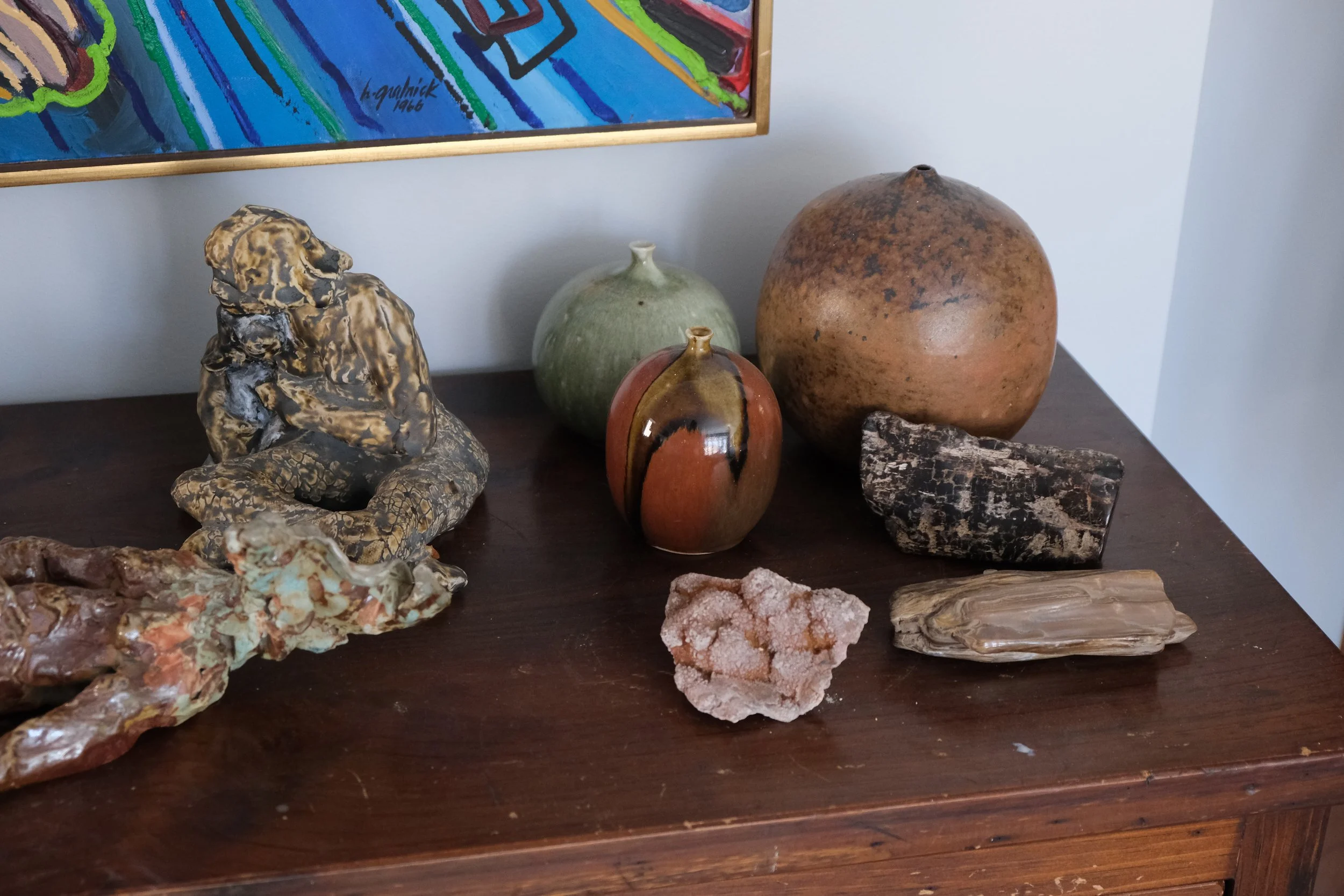
Vic: But I would say that the reason why I make clay today is because of Jim. Jim invited me to come and work with clay
Janet: Every day, for Victor, his hands need to be in clay. He needs to be making something. If he isn’t, then he thinks that's not a good use of time.
Janet: Would it be fair to say that nature is a big influence on you?
Vic: Yeah. I used to be more focused on making a living and money and that kind of thing. But now I hope that the thing that I leave behind with the work that I'm doing today is illustrating the relationship and the need for us to really protect humanity and the animal world.
The animal world to me is in big trouble. And the animal world example that I like to look at are, historically, the buffalo, which we almost annihilated. Of course there are huge herds of them now, but they're used as a meat source. It still tells me that kind of thing that we still don't have a real understanding of how important the animal world is for us to live. The reality is that extinction is very random in the world we're living in right now, both human-wise and in terms of the animal world. And the animal world is more threatened than we are. And so, my piece is… I hope that somebody sees that we really are together here.
And I think you do that in the few pieces I've seen of your work, Eric. You have an affinity to testify to the animal world. I see that you have more of an interest in the exotic world with gorillas and things like that. There are things I can say, using words, but the words are vacuous, they come and go. The conversations are very ephemeral. Whereas when you have a painting, or a piece of sculpture, and you look at that object and look at it for, in some cases just a fraction of a second, and others, you stand in front and look at that animal, or the relationship, the combination between a bird's head and a gorilla's head, and the bird's nest, and the interrelationship of that universe, depending on one another's survival and for continuation of the species – it’s stiffer.
Jamie: During COVID, everyone started to hear the birds again and they had forgotten how important it was, you know?
Vic: Oh boy. You need to be reminded by art.Janet's son’s stepmother, she loves birds and she actually has one of Jim's pieces, and so she asked me to make bird baths. They cracked, I dried them too fast and did a lot of the technical things I didn't do well. But the other day, I have these, let's call them my geriatric students. Besides Janet's mother, some friends of Janet's and her mother and...
Janet: For Mother's Day, we did a mother-daughter activity. They were thrilled, you know? My mom was delighted. She never saw herself as an artist. She has dementia, but her motor memory has been kicking in. And so, Vic's been working with her and suddenly here she's making a tray almost by herself. And it's beautiful. It's amazing.
Jamie: [Jim] Do you want to tell a little bit about what it was like to be Vic’s student?
Jim: Well, it's, my perspective is… it starts with a sister who I have who is a couple years older. She had this fabulous social life, and a lot of her friends were taking ceramics and I couldn't think of anything cooler at that time as a 13-year-old kid. So, the first chance I got to take pottery, I took it. And I was incredibly bad. In fact, I was on the precipice of failing my first class. There was something, it wasn't like a click like “oh I get it”. I just wanted it. And then at some point after that I got it, as people often do. It transformed my entire identity as a high school student. Like, I found a place to be because I was a relatively shy kid and [pottery] just was home. And Vic at that time was not particularly encouraging of students to go on.
Jamie: Do you think some of that discouragement actually helped you to become an artist, like overcoming it?
Jim: It's such a good question. I don't know if that resistance in my own competitive nature at that point made it like “I'm gonna do this thing, right”? It just became, whatever the resistance and not being able to catch it in the beginning, became I guess a war cry in that moment.
Jim: Well, that's the deal. it's a constant dialogue. I don't know if it ever ends on some level. There's that internal drive to make until it's completely your thing, and then there's the outer world where you're looking for some level of connection, or you do it for a living so you have to be out there and it has to sell. So, all those things are just part of the dialogue that you're constantly in contact with. You have to hustle. Forever hustle.
Vic: Well, let's try it this way. Well, we all have hands. That doesn't make us doctors
Jim: Except in my case (laughs).
Eric: So, it sounds like maybe your figurative works are influenced or inspired by the figure/anatomy classes you took when you were in school like your figure drawing?
Jim: I'm going to take this one. Because after Vic's stroke, which was just over four years ago, right?
Janet: Yeah.
Jim: So after that, Vic started making landscapes, which was a big area of exploration for him prior to that. So this is the way he came back, and ultimately, first in smaller pots, and then little by little. We did a retrospective at Ladue High School last year. And that was when I found out about Vic's big interest in representational human figurative work. So I asked him if he would think about that, and his comment was, "I couldn't do that. No way." And about a week later, these little figurines started to emerge. And then something happened, it just took off from there.
Jamie: So you gave him a challenge. And he rose to it.
Jim: It was really specific. The world doesn't need more landscape sculptors, and it felt like he was skating on autopilot. But, I mean, to see the level of articulation he has now versus three years ago and the level of resilience he has shown. It’s truly inspired everybody around him.
Eric: What about the birds? Did that come from making bird baths with your mom? Were you already making birds?
Vic: I like the owl. The owl I guess has always been a symbol of wisdom. One of the good things about technology and Facebook is I am seeing nature now like I've never seen it before. I've been to different cultures. I've been to the zoos. And I'm now seeing things now that are a part of nature that are below my mind.
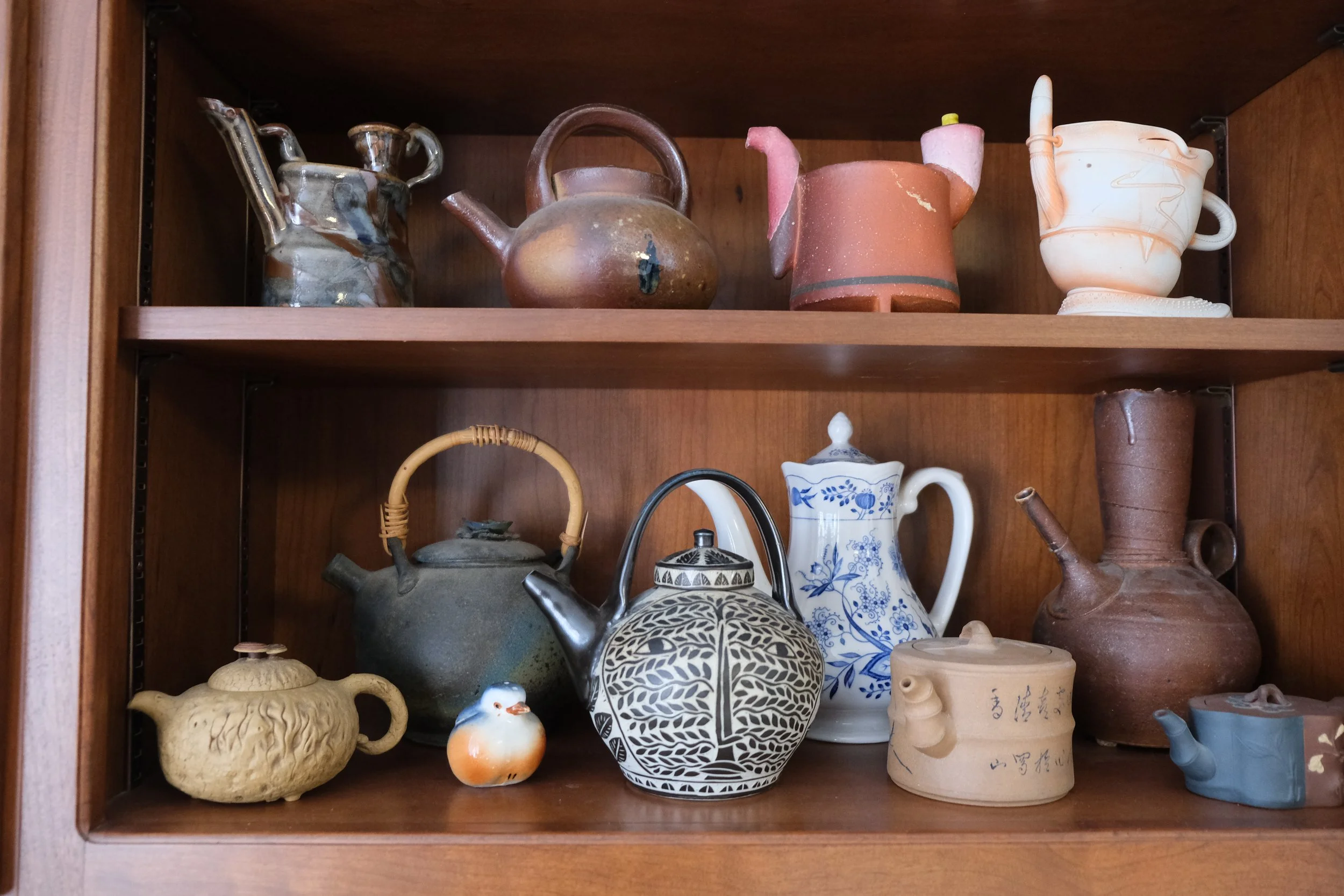
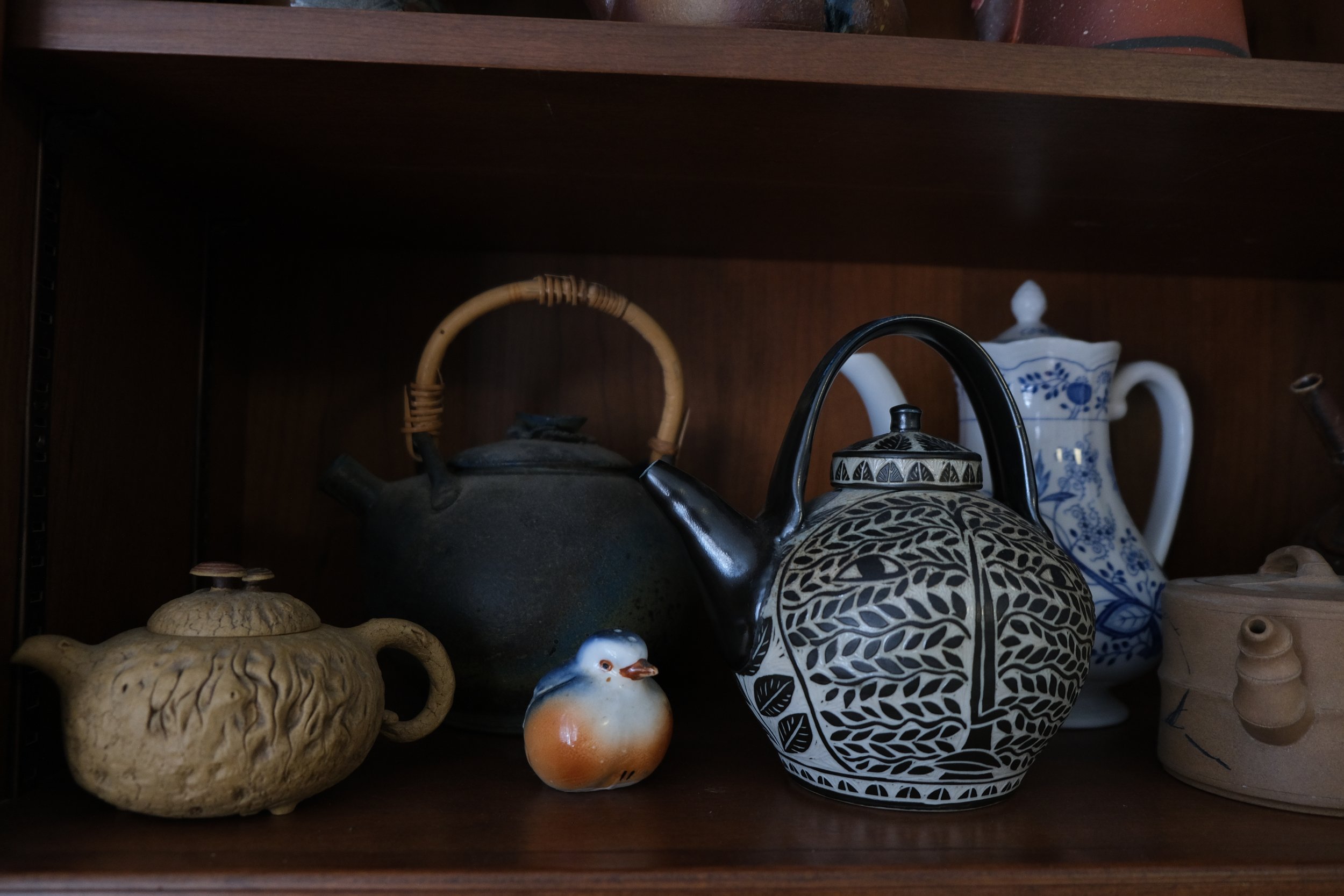
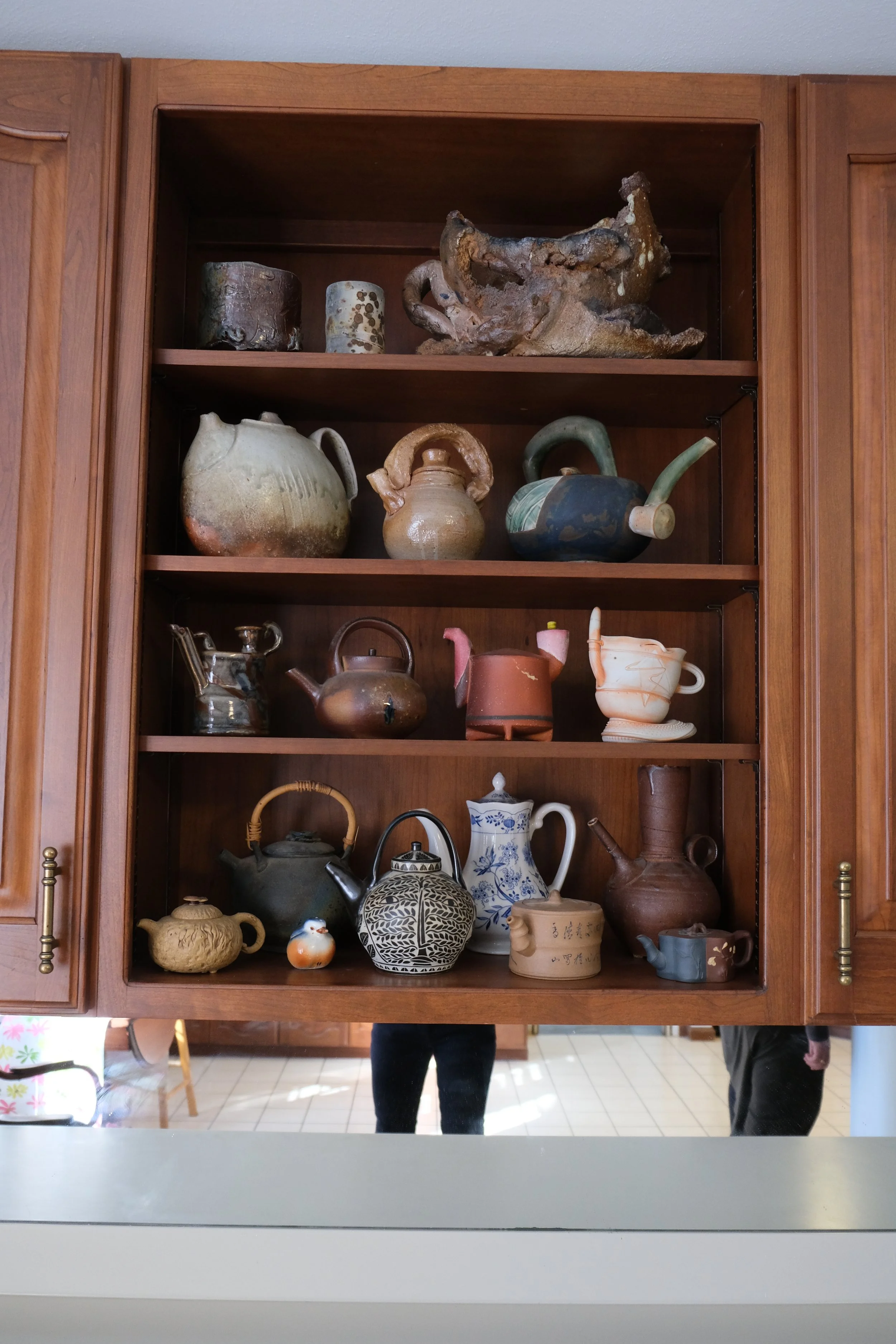
<photos above> Janet and Vic’s artist teapot and tea cup collection at their home.
Jim: Are you saying you're just looking in a new way?
Vic: Oh yeah. The Internet now is part of my entertainment. And all of the channels, you know, the National Geographic channels. Anytime you need research.
Eric: Can I ask you one more question? Do you think you found artwork or did art find you?
Vic: I don't think I had any control over it. It became me. I was the world's worst student. I was in the bottom percentile in school and I had gone to Wash U and one of the classes I was taking was a math class. Statistics? This guy had put a word up on the blackboard and they asked what this word was. I said, "Thermometer." I could tell instantly that I had done something wrong. But that's the way I saw the word. He stopped me at the end of class and said “Mr. Bassman, are you dyslexic?" I had never heard that word before. He said, "Well you don't think? You don't read?" I never did. Even now when I look at the stuff on Facebook, it will take me often two or three times for me to write a paragraph.
All of a sudden I knew that I had this affliction. It explained why I couldn't read. I had always been very embarrassed by it. And so I tried to show you intelligence in another way. It took a long time for me to acknowledge that. The artwork was a kind of a voice. I was able to figure out in a young age that I could copy things well. So the art found me that way.
Everything that we do as a species is artistic. It's the art of being a good doctor, the art of being a good ceramic artist, the art of teaching, the art of everything is an art. It just so happens that the art I found was being able to copy pictures, and then it became something more than just making copies. It became something personal.
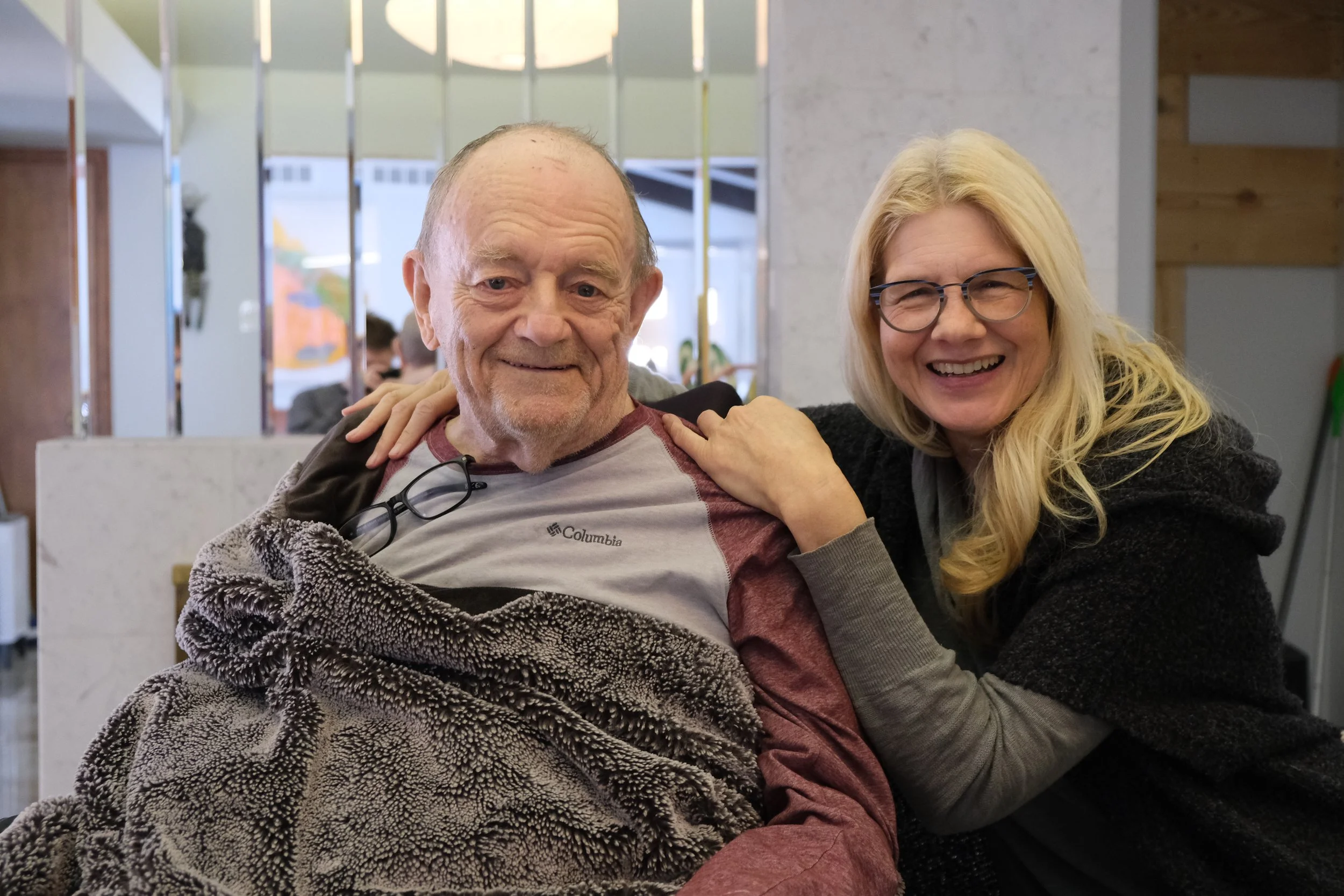
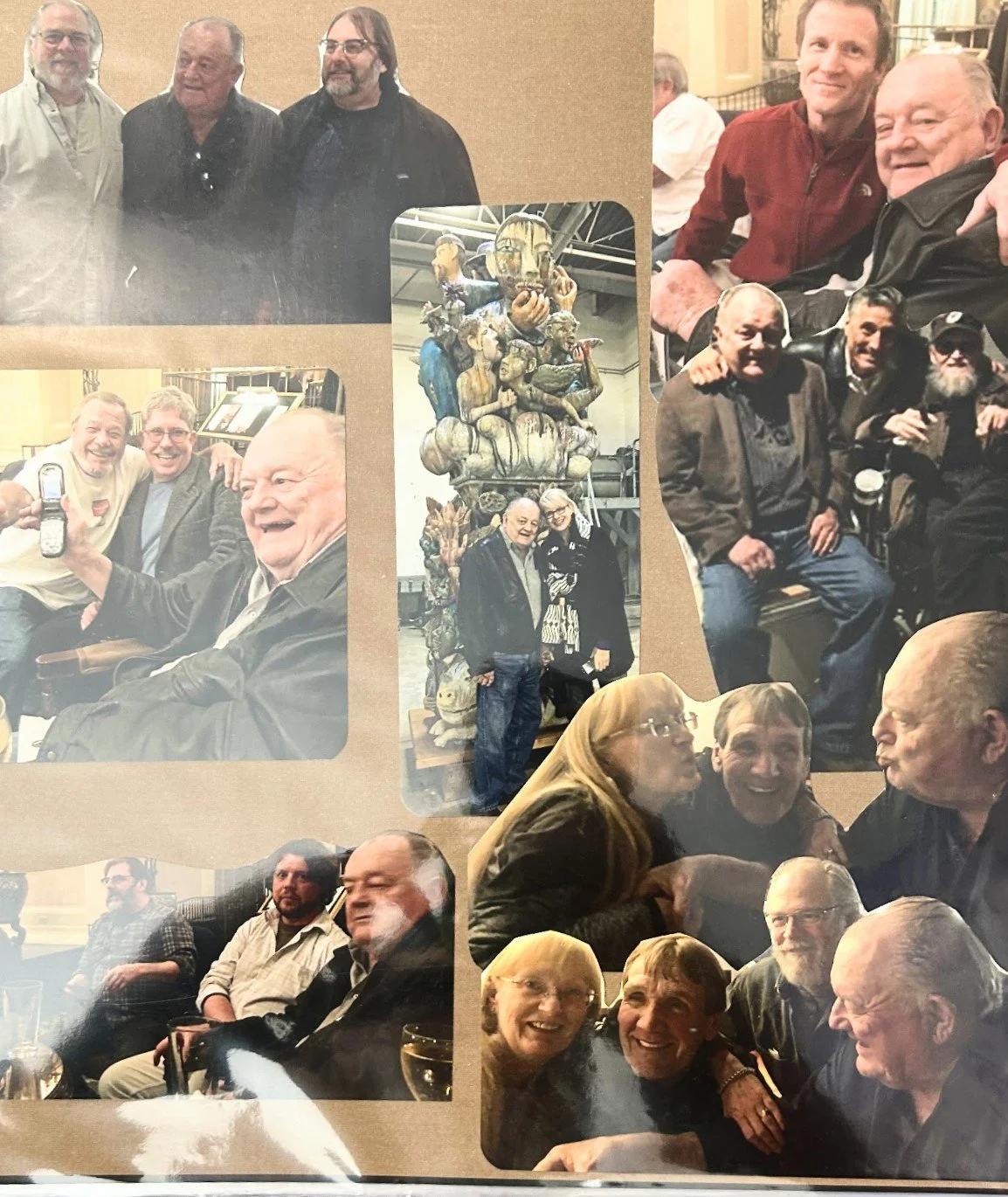
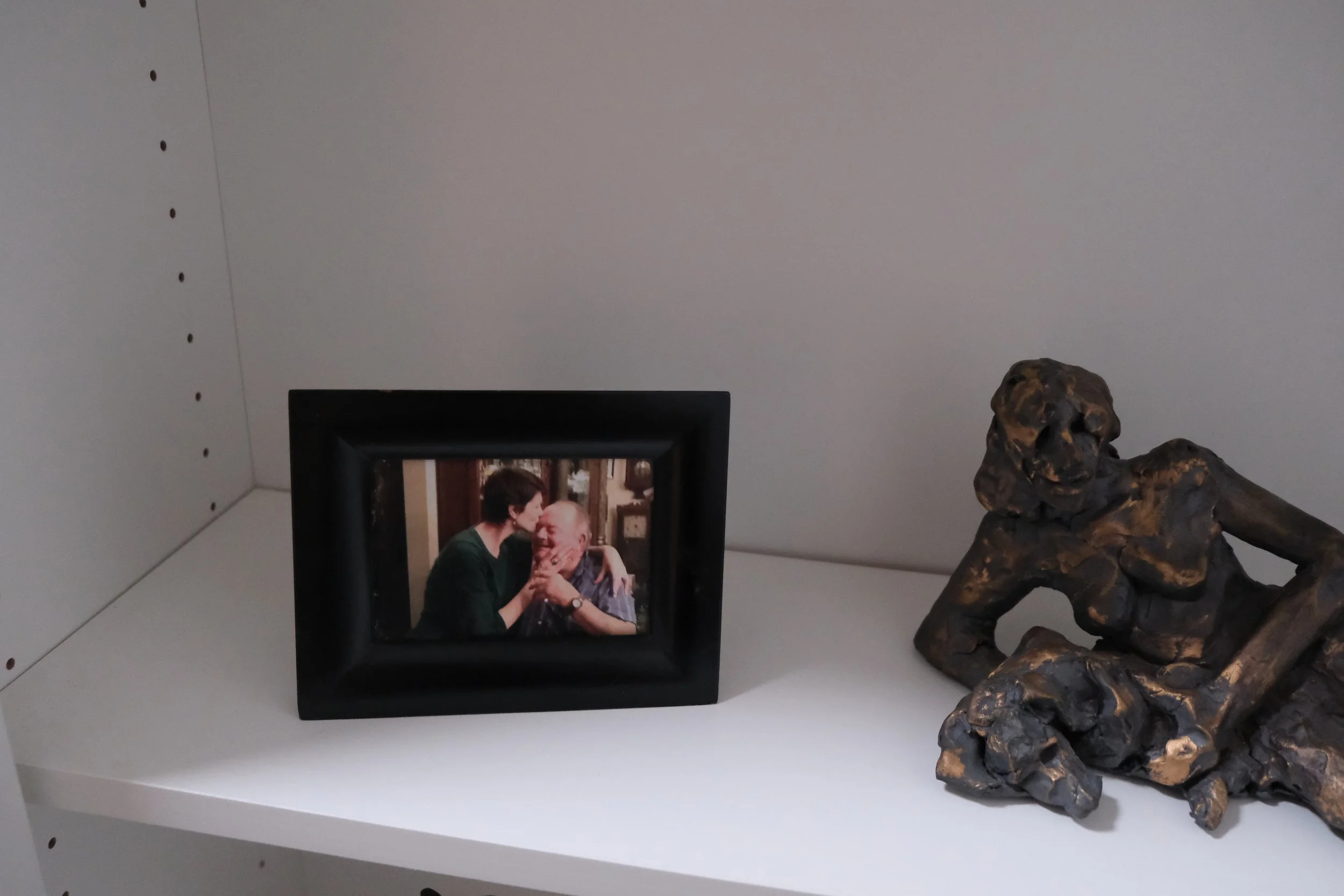
<photo above> Vic and Janet
